Reviews
Part of Planning a backyard studio around trades, panels and one mini-split
Which studio builder upgrades earn their price, and which are margin
How to read a studio builder's upgrade sheet: which tier changes matter, which are margin, and the questions that turn a sales list into a specification.
What to take away
- Studio builder upgrades come on a sales sheet. Turn each line into a specification before you price it.
- Tier changes that alter the wall, roof or glazing are worth paying for. Surface changes rarely are.
- Ask what the standard package is, in numbers, before you judge what the upgrade adds.
- Some popular cladding upgrades bring dust hazards that belong in the conversation.
Make the standard package explicit first
You cannot judge an upgrade without knowing the baseline. Ask for the standard specification in measurable terms: wall depth and insulation type, roof assembly, window performance numbers, and door construction. Also ask for the air sealing approach and what electrical work is included.
Ask for R-values, window U-factors and SHGC, and a blower door target in ACH50. Those numbers make one builder's sheet comparable to another's.
If a builder cannot state the standard package in those terms, the upgrade sheet is not comparable to anyone else's. The other half of the baseline is what their turnkey price excludes.
Upgrades that usually earn their price
Upgrades That Earn Their Price
Upgrade
- Deeper wall, better insulation
- Cannot be changed later
- Higher performance glazing
- Expensive to replace
- Larger roof overhang
- Protects wall and door
- Heat pump sized properly
- Undersized never catch up
- Blocking and conduit
- Cheap while open
- Higher ceiling
- Structural, not retrofittable
Why It Pays
- Deeper wall, better insulation
- Higher performance glazing
- Larger roof overhang
- Heat pump sized properly
- Blocking and conduit
- Higher ceiling
Six upgrades show up on studio sheets as tier changes. Each one is hard or expensive to redo after the shell is closed, which is why the price is easier to justify.
- 2x6 framing with Rockwool ComfortBatt R-23 mineral wool.R-23 batts fit a 2x6 cavity without compressing. Material typically runs $1.10 to $1.60 per square foot, and mineral wool holds R-value better than fiberglass when damp.
- Huber ZIP System R-sheathing with taped seams.ZIP System R-6 panels add R-6 continuous insulation and a taped water and air barrier in one layer. Expect roughly $1.75 to $2.75 per square foot over OSB plus housewrap. Huber publishes a 30-year limited system warranty.
- Pro Clima Intello Plus smart vapor retarder with Tescon Vana tape.The membrane is vapor variable and airtight. Membrane typically sells for $0.70 to $1.10 per square foot; tape runs $45 to $65 per roll.
- Cardinal LoE-366 glass with argon in a Marvin Essential or Andersen 400 Series window.LoE-366 delivers a U-factor near 0.25 and a solar heat gain coefficient near 0.27 in a double-pane unit. The upgrade usually adds 15 to 30 percent to the window line.
- 24-gauge standing seam metal roof.Service life runs 40 to 70 years, and installed cost is typically $12 to $20 per square foot against $4 to $7 for asphalt shingles. Hidden fasteners and raised seams suit a low-slope studio.
- Mitsubishi Electric M-Series or Daikin Fit ductless heat pump.A single-zone unit installed typically costs $3,500 to $6,500. Look for HSPF2 around 10 to 12 and SEER2 around 18 to 20.
Upgrades that are usually margin
- Luxury interior cladding over a standard wall build. Cedar tongue-and-groove accent walls run $8 to $15 per square foot installed; painted drywall runs $2 to $4.
- Extra windows beyond the daylight you need, particularly on the sunny side. Each added unit costs roughly $800 to $1,500 installed and removes insulated wall area.
- Builder supplied furniture, which is rarely sized for how you work. Built-in desks and Murphy beds commonly carry a 30 to 50 percent markup over retail.
- Decorative exterior detail with no overhang above it. Faux timber brackets and shutters typically add $300 to $1,200 installed and manage no water.
- Smart controls bundled at a price well above buying them yourself. A Lutron Caseta smart switch sells for roughly $60 to $120; bundled packages often list at $250 to $400 per point.
Cladding upgrades deserve a specific question
Fiber cement from James Hardie or Nichiha is a common upgrade, and thin brick veneer is the masonry alternative. Both perform well.
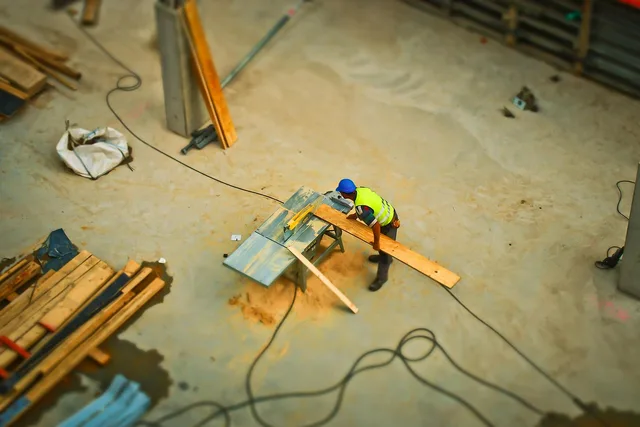
Both also contain crystalline silica, and cutting, grinding or drilling them releases respirable dust. OSHA's overview of crystalline silica explains why that dust is a health hazard and why wet cutting or on-tool extraction is the standard control.
Ask how the builder cuts these materials on your property, where they do it, and what protection the crew uses. It matters for your household as well as for them, particularly if the studio is close to the house. Site cutting produces most of the dust and most of the injuries on a small build.
Where the equipment upgrades come from
Small buildings inherit equipment and controls that were proven on larger ones first. The Department of Energy's commercial buildings work is a reasonable place to see which technologies are being pushed for efficiency, and the consumer scale versions tend to arrive a few years later.
The practical filter is simple: prefer upgrades a local installer can service, and be cautious about any system with a proprietary app and no local support. A Panasonic WhisperComfort ERV sells for roughly $400 to $700, and most HVAC techs can service it.
Ask which upgrades the builder installs most often and which they rarely sell. The rarely sold ones are sometimes overpriced and sometimes simply unfamiliar, and knowing which is which tells you where to push.
Turn the sheet into a specification
Take the upgrade list, write the numbers next to each line, and ask for it back as part of the contract. Anything that survives that process is real. Anything that does not was a description.
The same test works on a prefab supplier's option list, and the current market conditions explain why some of these options have become standard.