Maintenance
Part of Why do the same backyard building mistakes keep happening
Backyard building mistakes: checks before repairing an old one
Backyard building mistakes in older structures start with skipped checks: water, informal wiring, lead paint and asbestos sheet, and who to call.
What to take away
- Assess an older backyard building before you repair it, because wiring, paint and sheet materials can each change who does the work.
- Anything wired informally should be assessed by a licensed electrician rather than patched.
- Older structures can contain lead paint or asbestos materials. Test before disturbing them.
- Fix the water source before you fix anything it damaged. Otherwise you will do the work twice.
Assess first, repair second
Assess before you repair, because three problems in an older building decide who does the work: informal wiring, lead paint and asbestos-containing sheet. Each is cheap to check beforehand and expensive to discover halfway through a repair.
- Look for water at the base of the wall and for condensation inside.
- Have a licensed electrician assess any wiring that was added informally.
- Test painted surfaces for lead before sanding or scraping.
- Test older cement sheet for asbestos before cutting or removing it.
- Ask the building department which repairs need a permit, then repair.
Water and condensation come first because they are the usual cause of the damage you will find. The wiring, paint and sheet checks come before any cutting or scraping.
Rule out water first
Fix the water source before you fix anything it damaged, or you will do the work twice. Watch the building during a real downpour. Is water splashing off the ground onto the wall, running toward it because of grade, or arriving from a downspout that discharges too close?
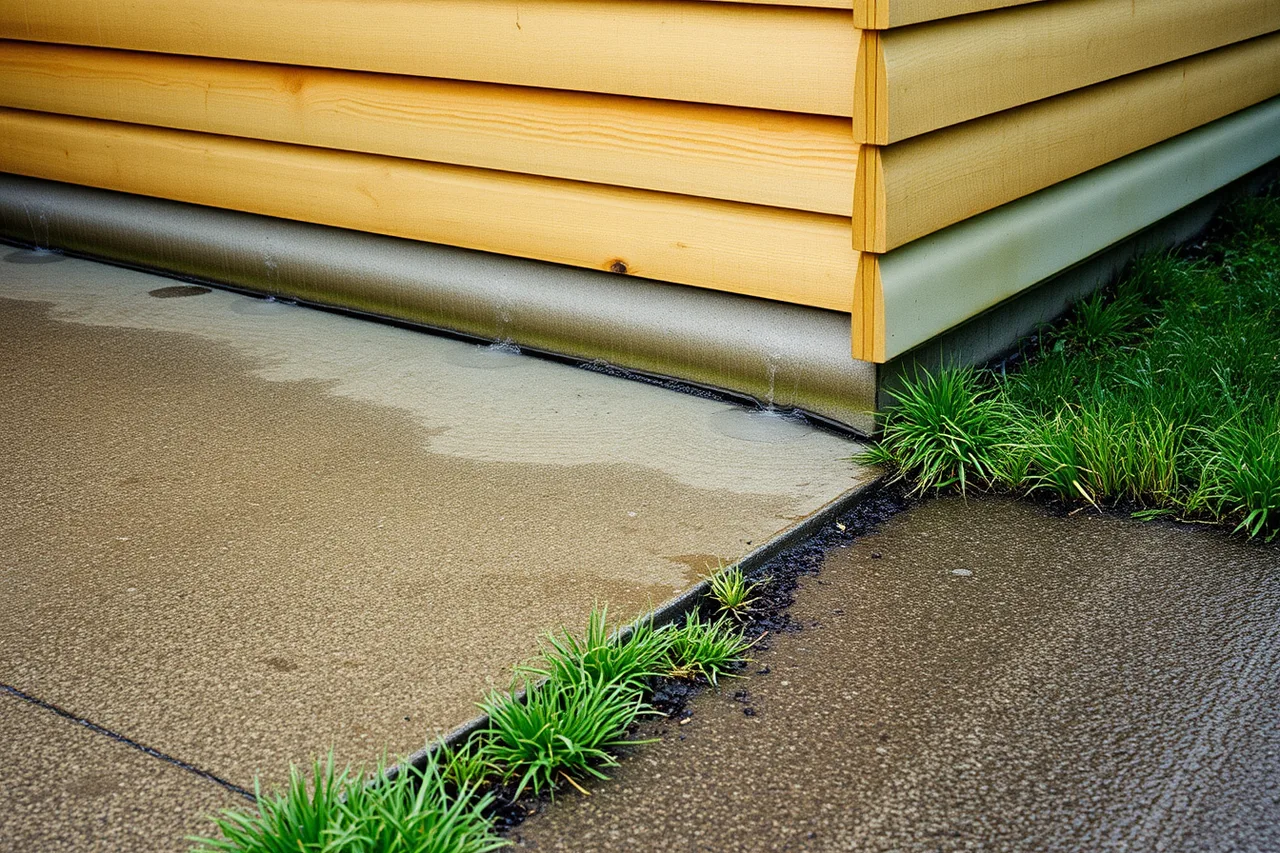
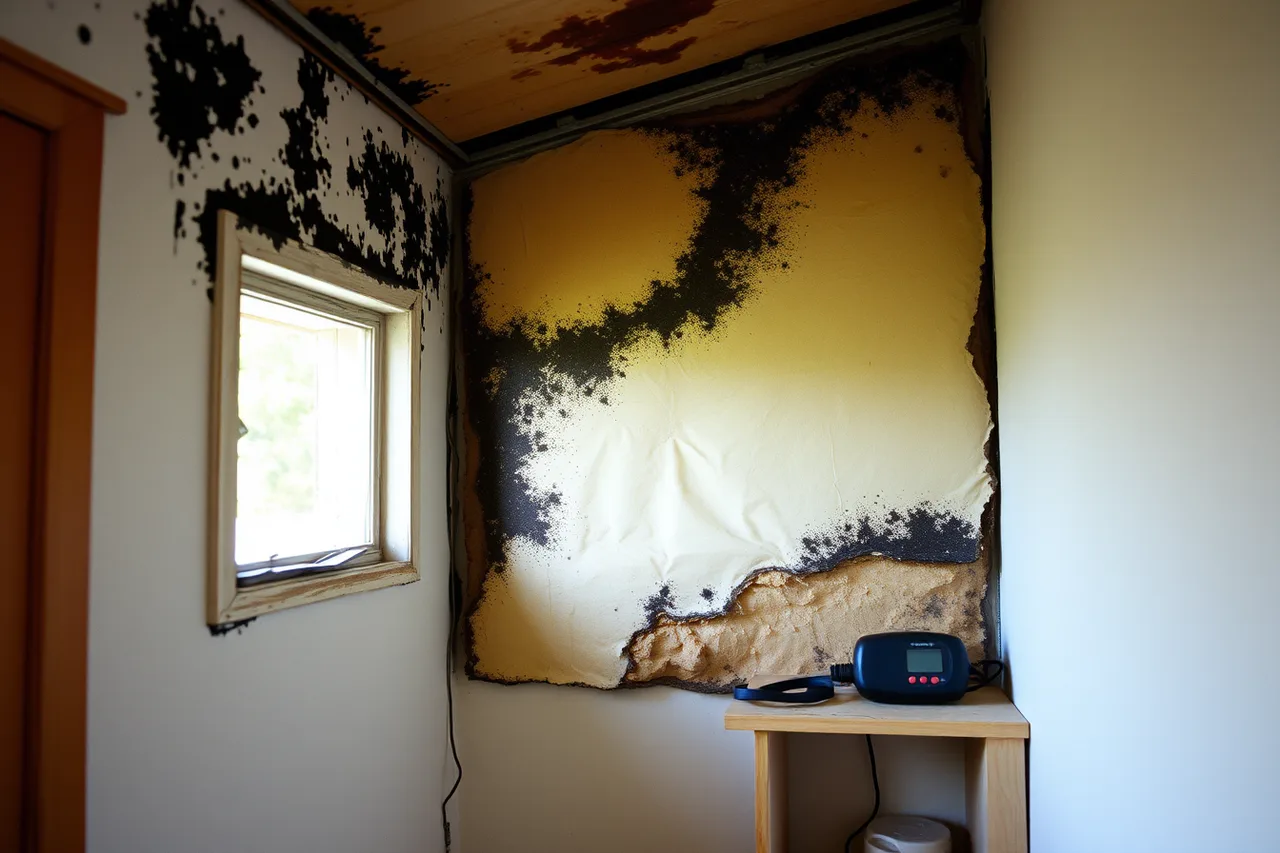
Condensation and leaks look similar and need opposite responses. Leaks follow rain, while condensation follows temperature and humidity. A cheap logger left for a few weeks separates them quickly, so diagnose before repairing.
Wiring that was never inspected
Informal wiring is assessed, not patched. An extension cord run permanently, a cable buried shallow, or a circuit added at the panel by someone unqualified all call for the same response. A licensed electrician assesses the whole installation, and the corrected work is permitted and inspected.
This is the failure mode where the consequence is fire or shock rather than inconvenience, so it belongs at the top of any repair list. Do not finish a wall over wiring that nobody has examined. Most US jurisdictions adopt the National Electrical Code (NFPA 70), with local amendments, and the local building department inspects against it.
Lead paint: test before sanding
Test painted surfaces in an older building before sanding or scraping. Sanding or dry scraping lead paint releases hazardous dust, especially for children. OSHA's lead overview notes that construction workers are exposed to lead during removal, renovation or demolition of structures painted with lead pigments.
Use a qualified testing service. Home kits vary, and disturbing material to sample it is itself a risk. Until the result is back, leave the paint alone. OSHA regulates lead in construction under 29 CFR 1926.62.
In a house built before 1978, the EPA's Renovation, Repair and Painting Rule sets lead-safe work practices, and a contractor paid to disturb lead paint in such a home needs to be certified under it. Ask a hired contractor for proof of that certification.
Asbestos: test before cutting
Test older cement sheet products before you cut, drill or remove them, because they may contain asbestos. OSHA's asbestos technical information states that asbestos-cement sheet can emit airborne fibers if it is cut, sawed or broken. Testing first is cheap. Assuming is not.
Ask the testing service which laboratory analyses the sample, and that it is accredited for asbestos analysis. OSHA regulates asbestos in construction under 29 CFR 1926.1101. Removal rules vary by state and locality, so ask your state or local environmental or health agency what applies before any asbestos-containing sheet is disturbed.
What to do with each older material
Four materials and systems need a decision before any repair starts. The table shows where each one turns up and what to do first.
| Material | Where it turns up | What to do first |
|---|---|---|
| Lead paint | Painted surfaces in older buildings | Test before sanding or scraping |
| Asbestos products | Older cement board, some sheet materials | Test before cutting or removing |
| Treated timber | Older ground contact framing | Handle with gloves, do not burn |
| Informal wiring | Extension cords, shallow cable, added circuits | Licensed electrician assesses the whole installation |
Permits and what comes after
Repairs often need a permit for electrical, structural or change-of-use work. Ask your building department which permit applies before starting, and write down its answer. File that note with the lab results and the electrician's assessment.
Once the assessments are done, repair in this order: water source, then structure, then services, then finish. Reversing that order produced most of these problems in the first place, which is the theme running through the root causes of backyard mistakes. A written upkeep routine keeps small faults from becoming repeat work.