Maintenance
Part of Backyard studios: use, codes and four build routes
Why backyard studios go off track
Backyard studios can go off track through vague scope, blind trenching, poor siting, unclear site responsibility, or ordering the shell before approvals.
What to take away
- A scope written as a priced list of nouns is the cheapest insurance against a mid-build argument.
- Public locate services mark utility-owned lines only. Your irrigation main, low-voltage cable and an old propane line are yours to find.
- Siting cannot be corrected later. Stake the footprint at full size and leave it through a rainstorm before you commit.
- One named person controls the site each day. Without that name in the contract, nobody does.
- Order the building last. Setbacks, height limits and the permit path come first, because deposits are hard to recover.
Failure one: a scope that lives in someone's head
An owner describes a home office. The builder prices a shell. Six weeks later the owner asks where the mini split and the second circuit went. They were never in the quote.
Scope as a list of nouns
- Floor build up
- Wall assembly
- Window count and type
- Door type
- Insulation
- Heating
- Lighting and receptacle count
- Data and exterior path
Every bidder prices the same list. That one habit prevents most of the ways a budget slips, and it is the first thing to check when you compare what a studio actually costs against what goes wrong.
Failure two: digging blind
Trenching for power, water or drainage is where backyard budgets go. Public locate services mark utility-owned lines. They do not mark your irrigation main, low-voltage lighting cable, or an old propane line from a previous owner.

OSHA's trenching and excavation guide is written for crews, not homeowners, but its main point holds. An unprotected trench can collapse without warning, and depth is not the only risk. For covered construction work, OSHA's excavation requirements are in 29 CFR Part 1926, Subpart P.
In the United States, call 811 (Call Before You Dig) before excavation. The state 811 center tells you how long to wait; do not dig until the required wait has passed and affected utilities have marked or cleared the site. Hand-dig carefully near marked lines, and keep spoil back from the edge.
A trench deeper than waist height belongs to someone with shoring, not to a shovel and optimism. This is work for a licensed trade, and your state or provincial occupational safety authority sets the rules that apply.
Failure three: siting the building by eye
A studio pushed to the back fence looks tidy on a sketch. Then it blocks the swale that carried roof water away from the house. Others land inside a setback, over a septic lateral, or under the drip line of a tree whose roots will lift the slab.
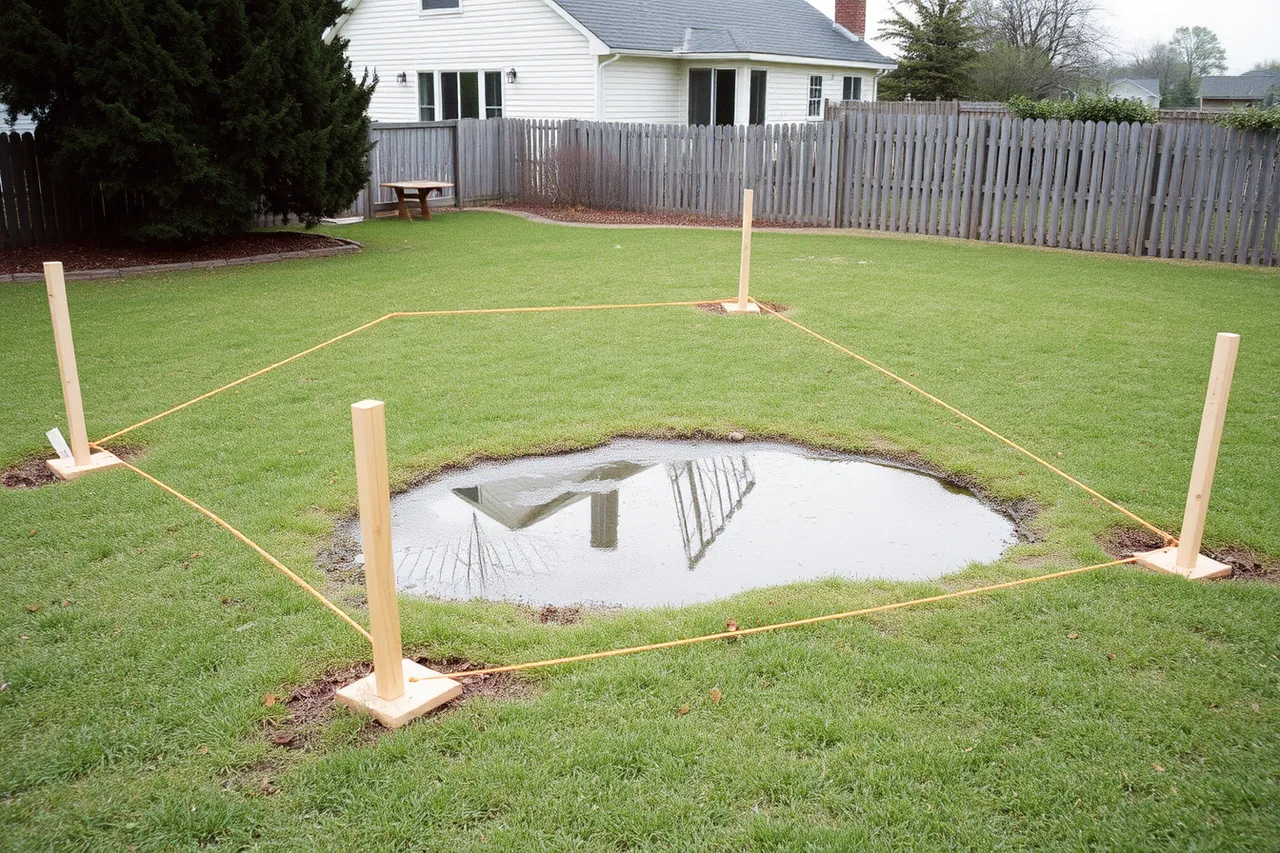
Stake the footprint at full size and leave the stakes through a rainstorm. Watch where the water goes. Check the stakes against the survey, not against the fence, because fences are frequently in the wrong place.
Setbacks, height limits and lot coverage come from your local building department and, where they exist, HOA covenants.
Several of the regrets homeowners report later trace straight back to a footprint nobody staked.
Failure four: no one is responsible for the site
OSHA describes a competent person as someone who can identify hazards and has the authority to correct them, in its guidance on the competent person. That is a safety role for the hazards involved, not automatically the person coordinating the entire backyard studio site. Backyard jobs rarely name anyone for either role.
So a ladder ends up on soft fill next to an open trench. On a mixed job, with a contractor plus your own labor, name in writing who controls the site on each workday, where materials are stored, and who runs equipment. For example: “For each workday, [name/company] is the site lead and coordinates site access, material storage, equipment use, and daily hazard communication.” The general contractor can fill that role; an owner-builder can do so only if they are actually coordinating the work.
That clause sits beside the insurance and safety answers you collected before hiring, covered in how to vet a contractor for studio sheds.
Failure five: buying the box first
The most expensive order of operations is: buy the studio, then ask about zoning. Deposits are hard to recover and delivery slots are hard to move. Confirm setbacks, height limit and the permit path first, then order. The planning sequence for the whole project exists to keep the purchase last.
Worked example: the recovery plan mid-build
Say your trench route changed after the quote, your footprint moved two feet, and the shell is already ordered. Here is the order that costs least.
Worked example: recovery plan
- Stop and write the scope, even mid-project. It costs a day and saves weeks.
- Re-locate utilities if the trench route changed at all.
- Photograph every concealed layer before it is coveredtrench, footing, framing, wiring, insulation.
- Keep one dated decision log, so nobody argues later about what was agreed.
- Book inspections early. Inspector availability, not your crew, usually sets the finish date.
Common questions
What derails schedules most?
Approvals and utility work, not framing. Both wait on other people's queues, and neither moves faster because your crew is ready.
Is a slab always safer than piers?
No. The right foundation depends on soil, frost depth, slope and drainage. A local designer or engineer answers that for your lot; copying a neighbor's foundation is how settlement starts.
Can I dig my own trench?
Sometimes, at shallow depth, after a locate, and never where gas or electrical work is involved. Depth, soil and nearby services change the answer fast, and a licensed electrician or gas fitter makes the final call.
How much contingency is realistic?
There is no single contingency figure that fits every backyard studio: soil, utility routes, access, drainage, and the scope all affect the risk. Before work starts, ask bidders to identify known allowances, explain what would trigger an extra, and state who must approve it. Set aside an amount based on the specific site information and exclusions in your bids; a percentage without those details would be guesswork.