Reviews
Part of Prefab studio sheds: six quote comparison criteria
Prefab Studio Sheds: Screen Factory Sealants Before Ordering
Before ordering prefab studio sheds, request safety data sheets for factory-applied sealants and finishes, then check hazards and ventilation guidance.
A prefab studio shed may arrive with sealants, adhesives, primers, or coatings already selected for joints and interior surfaces. Before ordering, ask which products the factory plans to use and review their safety data sheets (SDSs). This is a paperwork and suitability screen, not a test of brands or a guarantee about indoor air.
The screen sits beside the other criteria when you compare prefab studio shed quotes. It helps you spot missing information, understand handling warnings, and resolve questions before a product is built into the room.
What the paperwork can, and cannot, tell you
An SDS describes hazards and precautions for a chemical product. For workplace hazard communication, OSHA's Hazard Communication Standard requires manufacturers and importers to obtain or develop an SDS for each hazardous chemical they produce or import, and requires employers to maintain workplace copies and make them accessible to employees.
That workplace rule is not a promise that every shed seller will automatically provide a homeowner with every document.
Ask the supplier for the product information as part of your purchase review. An SDS is also not a full emissions report: it does not, by itself, establish what a cured product will release into a finished room or what the room's indoor concentrations will be.
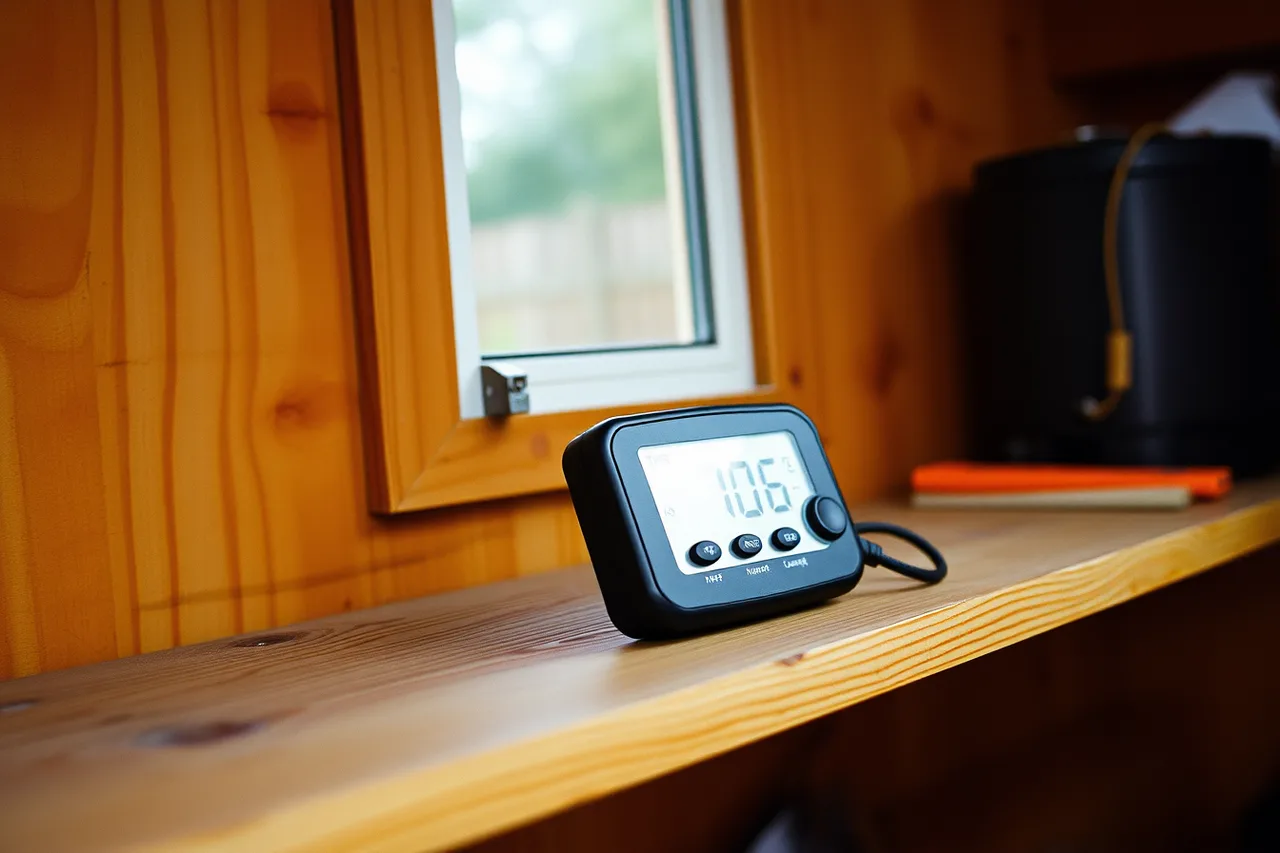
A temperature and humidity logger can describe conditions at the future studio site, but it cannot identify the factory's sealants or their hazards.
If you also want to trial consumer products on your own materials, see the separate product-testing guide. Here, the focus is the factory-installed material list and its documentation.
Request the exact factory-installed product list
Ask the supplier for the manufacturer and full product name of each sealant, adhesive, primer, and coating used inside the building or concealed in its assemblies. Ask where each one goes: at a joint, behind a finish, or on an interior surface.
A generic description such as "construction adhesive" is not enough to identify which SDS applies. Any factory-only upgrade needs the same documentation.
Request the SDS for each identified hazardous chemical, along with any product-specific instructions for application, ventilation, curing, storage, and protective equipment. Ask the supplier to confirm that the documents match the products in the proposed specification, not a similar product from the same manufacturer.
Also ask how substitutions are handled. If a product is unavailable, get the proposed replacement's identity and documentation before accepting a change to the order. Keep the answer with your written project decisions using the backyard studio planning checklist.
- Manufacturer and full product name of each sealant, adhesive, primer, and coating
- Where each product goesjoint, concealed assembly, or interior surface
- The SDS for each identified hazardous chemical
- Application, ventilation, curing, and protective-equipment instructions
- Written handling of any substitution
Read the SDS for the questions that matter
Start with the product name and hazard identification, then look for the practical instructions relevant to installation and use. Useful sections include:
- 2,Section Hazard identification: hazards and label information.
- 4,Section First-aid measures: what to do after exposure.
- 7,Section Handling and storage: precautions during use and storage.
- 8,Section Exposure controls/personal protection: ventilation and protective equipment guidance.
- 10,Section Stability and reactivity: conditions or materials to avoid.
OSHA's SDS format requirements specify information for sections 1–11 and 16. Sections 12–15 may be included, but are not mandatory under that format. If a relevant subheading has no applicable information, the SDS should say so; an unexplained blank is a reason to ask the supplier or manufacturer for clarification.
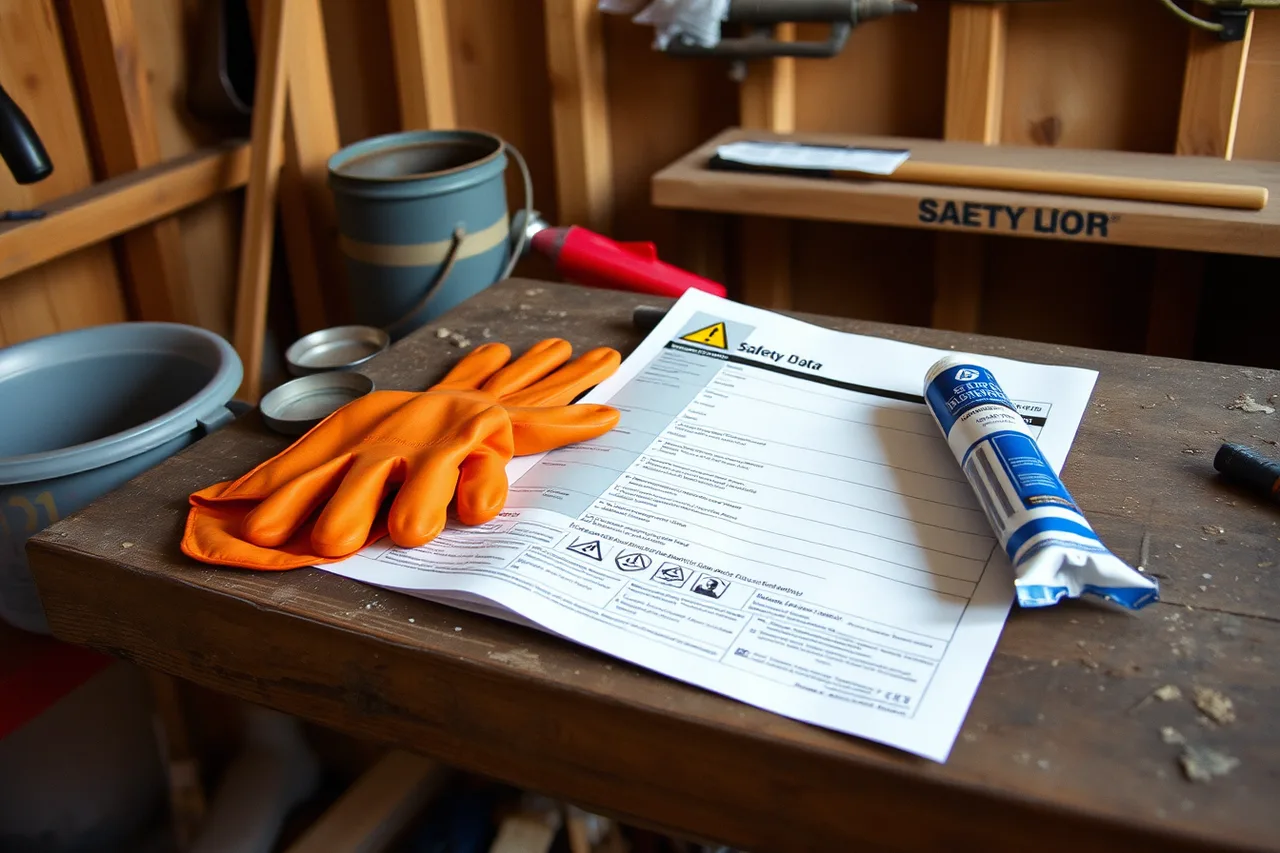
Local conditions matter too, so check what your climate demands of finishes. Follow the product-specific protective-equipment and ventilation instructions rather than assuming that household gloves or an open door are sufficient. The SDS helps you understand handling precautions, but the factory or product manufacturer may need to answer questions about installation conditions and when the finished room can be occupied.
Resolve gaps before the order is final
Send the supplier a short list of unresolved items: a missing product name, an SDS that seems to describe a different formulation, unclear ventilation or curing instructions, or an undocumented substitution.
Ask for a written answer and an updated product schedule. If the answer does not address the concern, ask whether the product can be changed before production and what alternative documentation is available.
Keep the final product list and SDSs with the project file, and bring them when you vet the installer. This gives you a record of what was specified if you later need to discuss an odor, a handling precaution, or a maintenance question with the builder or manufacturer. It also prevents a general assurance such as "standard materials" from being mistaken for product-specific information.
This review cannot certify a product as harmless or replace advice for a particular health concern. Its value is narrower and practical: know what the factory proposes to install, read the relevant warnings, and settle unanswered questions before those materials are part of your prefab studio shed.